Choosing Professional Audio Equipment Wholesale can give studios, event companies, schools, and retailers better access to dependable sound solutions. Wholesale purchasing is not simply about ordering more boxes. It involves comparing specifications, testing compatibility, and selecting equipment that performs under real working conditions.
A reliable supplier should understand microphones, mixers, amplifiers, speakers, cables, and signal processors. They should also explain technical details clearly, including impedance, power handling, frequency response, and warranty coverage. In practice, experienced buyers often request product samples before placing larger orders. A speaker may sound excellent in a showroom but behave differently in a crowded hall. Room size, audience movement, and background noise all matter.
Quality control matters greatly. Reputable wholesalers provide traceable product information, consistent packaging, and responsive after-sales support. They should follow applicable safety, labeling, import, and consumer protection requirements. This protects both the buyer and the final customer. It also reduces avoidable returns.
Wholesale is not automatically cheaper.
A lower unit price may hide weak documentation, limited support, or inconsistent stock. That is where careful judgment becomes essential. Even experienced purchasers can overlook cable quality or connector standards when deadlines become tight. Reviewing supplier records, technical certificates, delivery terms, and warranty policies creates a more reliable decision.
The strongest wholesale partnerships develop over time. They combine fair pricing with practical expertise, honest communication, and stable product performance. When those elements align, businesses can build complete audio systems with greater confidence. However, every purchase still deserves review, because no supplier or product fits every application perfectly.
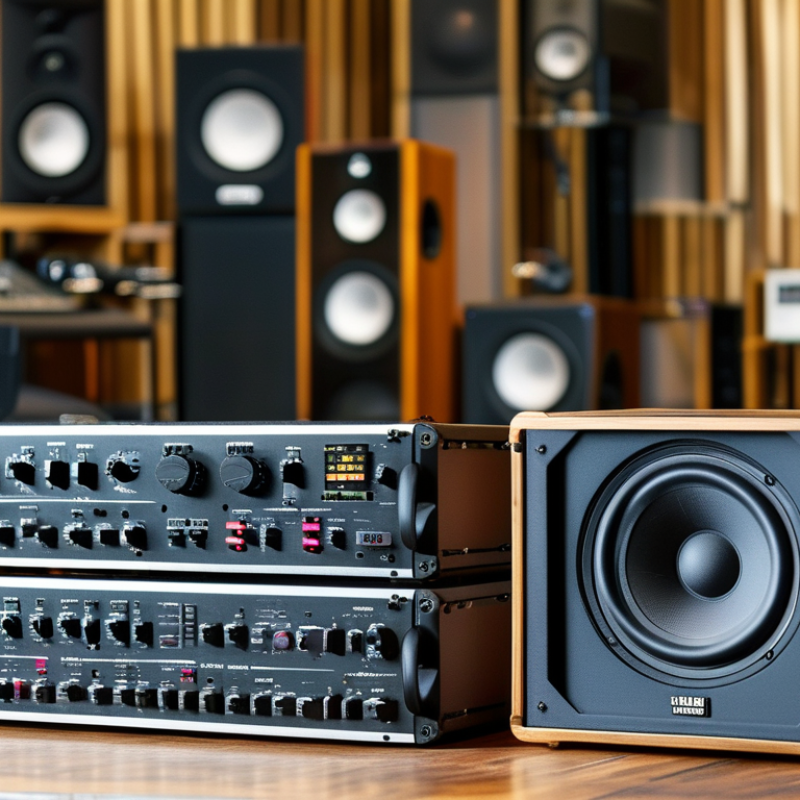
Professional audio equipment is often judged by two practical benchmarks: a 20 Hz–20 kHz frequency response and less than 0.1% THD+N. These figures describe coverage and cleanliness across the audible range. However, they are not a universal legal definition. IEC 60268-3 requires manufacturers to state measurement conditions, including load, frequency, and output level. Without those details, a perfect-looking specification can mislead buyers.
In real wholesale purchasing, I check response graphs rather than only headline numbers. A speaker may reach 20 Hz, but output can fall sharply near that point. An amplifier may show 0.05% THD+N at 1 kHz, yet perform differently at high power. Audio Engineering Society measurement papers repeatedly stress consistent test methods. The EBU Tech 3341 report also shows why controlled loudness measurements matter in professional production. Reliable data supports safer system matching, fewer returns, and more predictable results across venues.
Tips: Ask for THD+N at the intended power, impedance, and bandwidth. Request the tolerance range for frequency response. Compare measurements made under the same conditions. I have seen inexpensive units pass a narrow laboratory test but sound strained in a full-band setup. That does not make every low-cost product poor. It means specifications need context, and sometimes my first judgment needs reconsideration. Wholesale buyers should keep test reports, inspect samples, and verify performance before placing large orders.
| Evaluation Dimension | Reference Criterion | What It Means in Practice | Wholesale Purchasing Relevance |
|---|---|---|---|
| Frequency Response | 20 Hz–20 kHz, with the tolerance stated by the manufacturer | Covers the commonly specified audible frequency range for human hearing. The tolerance is essential because a range without a level limit does not describe response accuracy. | A clearly specified response helps buyers compare products consistently and select equipment for installation, touring, recording, or commercial systems. |
| Total Harmonic Distortion Plus Noise | Less than 0.1% THD+N under a stated test condition | Indicates that unwanted harmonic products and background noise are low at the specified frequency, output level, load, and bandwidth. | Comparable test conditions reduce the risk of purchasing equipment whose headline specification cannot be reproduced in real use. |
| Signal-to-Noise Ratio | Higher dB values generally indicate a lower audible noise floor; evaluate using the same weighting and reference level | A higher signal-to-noise ratio can provide cleaner quiet passages and more usable dynamic range, but the measurement method must be considered. | Supports dependable system design when multiple devices are connected in a signal chain. |
| Dynamic Range | Reported in dB and measured with a defined reference and bandwidth | Describes the span between the system noise floor and its maximum usable signal level. | Helps integrators match equipment to live sound, broadcast, studio, and presentation applications. |
| Output Capability | Power or maximum output level must be stated with load, impedance, duration, and distortion limits | A numerical output rating is meaningful only when the electrical and test conditions are included. | Accurate specifications help wholesalers configure suitable quantities and avoid underpowered or incompatible systems. |
| Input and Output Connectivity | Balanced and unbalanced connections should be identified by connector type, signal format, and nominal level | Balanced connections can provide better rejection of induced interference when correctly implemented and connected. | Standardized connectivity simplifies deployment, replacement, inventory management, and system expansion. |
| Reliability and Duty Cycle | Assess operating temperature, ventilation, protection features, serviceability, and stated duty requirements | Professional use often involves repeated operation, transportation, and variable environmental conditions. | Reliable inventory can reduce replacement frequency, service interruptions, and total operating cost. |
| Quality Consistency | Products in the same order should meet documented specifications and inspection requirements | Consistent performance is important when several units operate together or are supplied to multiple projects. | Bulk purchasing is more effective when incoming inspection, documentation, and batch traceability are available. |
| Customization and Configuration | Confirm available voltage, connector, mounting, control, packaging, and documentation options | Different markets and installations may require different electrical, mechanical, or documentation formats. | Wholesale orders can be aligned with project specifications instead of relying on one general configuration. |
| Total Cost of Ownership | Consider purchase price, freight, installation, energy use, maintenance, warranty, and replacement cost | The lowest initial price does not necessarily produce the lowest long-term cost. | Wholesale planning can improve budget control when equipment is standardized across multiple projects. |
| Documentation and Compliance | Require technical sheets, user manuals, safety information, test conditions, and applicable conformity documentation | Complete documentation supports safe installation, accurate comparison, operation, and maintenance. | Documentation reduces procurement uncertainty and supports project approval, training, and after-sales service. |
: It describes the measured frequency range an audio device can reproduce. A 20 Hz rating does not guarantee strong bass output. Check the response graph and tolerance range. Numbers need context.
Not necessarily. The result depends on power, impedance, bandwidth, and test frequency. An amplifier may measure 0.05% at 1 kHz, then distort more at high output. Request results at your intended operating level.
Ask for frequency response tolerance, output power, load impedance, bandwidth, and test conditions. Compare reports made under identical settings. A narrow laboratory test can hide problems during full-band operation. I have trusted impressive numbers too quickly before.
Inspect samples and test them with realistic speakers, cables, and signal levels. Check response graphs, noise, heat, connectors, and output stability. Keep serial numbers and sample results. One sample is useful, but not perfect.
Request test reports, declarations, electrical ratings, production records, and certificate scopes. Confirm the documents match the exact model, revision, and power configuration. Inspect labels on the physical unit. Files alone are not enough.
Confirm that required regional markings apply to the product and its intended market. Check authorized testing evidence, electrical ratings, and applicable requirements. Do not treat a marking as universal proof of quality. Missing labels can delay delivery.
It should state coverage, response times, replacement procedures, exclusions, labor, freight, and software support. Ask whether batteries, firmware, and installation faults are covered. A low invoice may become expensive after one failure. Read the exclusions carefully.
Include installation, calibration, training, energy use, repairs, downtime, storage, and disposal. Compare a three-year ownership estimate, not only the purchase price. Separate fast-moving adapters from slow-moving amplifiers. Old stock becomes trapped cash.
Set reorder points from actual usage and review stock every quarter. Test one procurement batch before increasing the order. Keep warranty dates and service notes in one accessible record. Forecasting still fails sometimes. Maintain a cash buffer.
Professional Audio Equipment Wholesale offers a practical way for studios, venues, integrators, and production companies to obtain reliable systems at controlled costs. Professional audio is typically designed for a broad 20 Hz–20 kHz frequency response and less than 0.1% THD+N, supporting clear and accurate sound reproduction. Wholesale purchasing can reduce unit prices through bulk-order savings, while MOQ requirements and distributor margins should be reviewed carefully to ensure the order matches actual demand.
Performance should also be evaluated through measurable specifications, including 24-bit/48 kHz audio processing and a dynamic range of approximately 110 dB. Buyers should verify compliance with relevant IEC 60268 and AES standards, along with applicable CE or UL safety requirements. A complete procurement plan should compare warranty coverage, expected inventory turnover, maintenance needs, and total lifecycle costs. This approach helps organizations balance sound quality, regulatory confidence, cash flow, and long-term operational value.

 TACT Pro Audio