China has become a major production center for professional audio equipment, including the Line Array Speaker market. Its manufacturers serve concert venues, houses of worship, conference centers, touring companies, and outdoor festivals. However, identifying the “top” companies requires more than checking factory size or online popularity.
This guide examines Chinese manufacturers through practical performance criteria. These include sound consistency, cabinet design, driver quality, amplifier compatibility, rigging safety, production control, and after-sales support. A reliable manufacturer should provide measurable specifications, clear testing procedures, and complete technical documentation. Field experience also matters. A speaker may look impressive in a showroom, yet perform differently in a crowded hall or open-air venue.
Real installations reveal important details. Listen for vocal clarity from the rear seats. Check whether bass remains controlled at higher output levels. Inspect connectors, handles, coatings, and rigging points after repeated transport. Small weaknesses become expensive during touring work.
The strongest companies usually combine engineering knowledge with stable manufacturing capacity. They may offer custom finishes, system tuning, and installation guidance. Still, no manufacturer is perfect. Some public specifications need independent verification. Certain product comparisons also depend heavily on room design, amplifier settings, and operator skill.
This overview introduces China’s leading Line Array Speaker manufacturers and explains how buyers can assess them responsibly. It focuses on evidence, application experience, and long-term value rather than promotional claims. That approach may feel slower. It is usually safer.
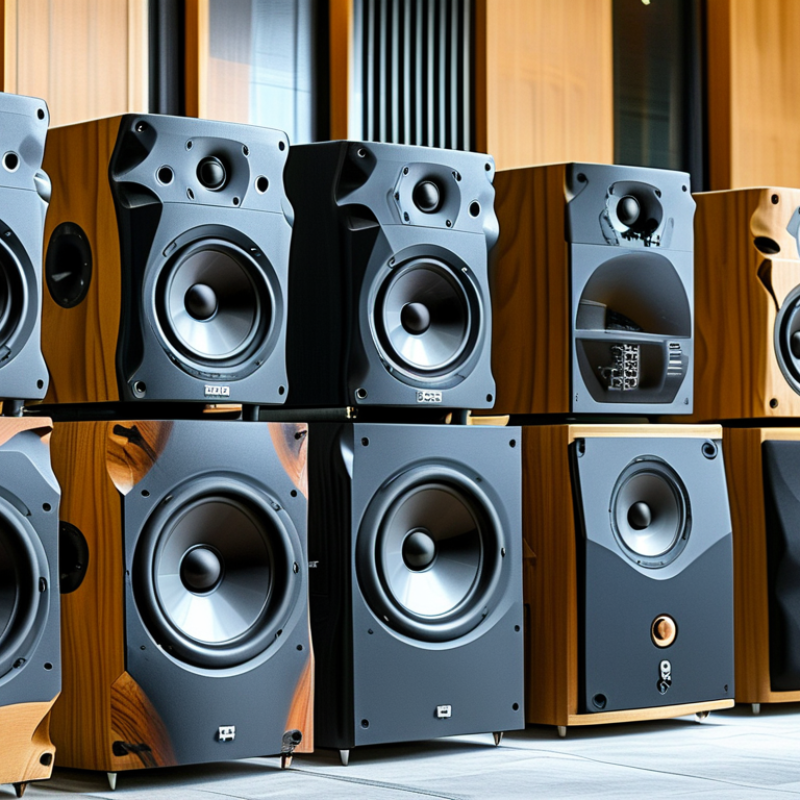
A line array speaker is a group of drivers arranged closely in a vertical column. This structure shapes sound into a controlled pattern, rather than spreading it equally in every direction. When the drivers work together, their wavefronts combine and project farther across the audience. Vertical dispersion becomes narrow, while horizontal coverage remains comparatively wide. This helps reduce unwanted reflections from ceilings and floors.
Inside each cabinet, woofers handle low and mid frequencies, while high-frequency drivers provide detail and speech clarity. Curved waveguides improve phase alignment between adjacent cabinets. Installers then adjust the cabinet angles to match the room’s seating plan. A small angle change can affect coverage noticeably. Prediction software estimates sound pressure levels before installation, but measurements with calibrated microphones remain essential.
In practice, Chinese line array manufacturers often refine cabinets through simulation, prototype testing, and repeated listening checks. Reliable production should include frequency-response tests, impedance checks, power handling tests, and inspection of rigging points. Field experience shows that a powerful system can still sound uneven when the angles are poorly set. Not every venue needs one. A compact hall may perform better with fewer cabinets and careful delay settings. The difficult part is balancing output, clarity, transport weight, and cost without chasing specifications alone. Some design decisions remain debatable, especially when room acoustics change between empty rehearsals and crowded events.
China’s line array speaker industry has developed from contract manufacturing into an engineering-driven sector. Export workshops once focused on cabinets and drivers. Today, many factories integrate acoustic simulation, digital signal processing, and automated testing. Systems are commonly assembled in modular columns, with rigging hardware, transport cases, and preset software designed together.
Market reports show why this shift matters. MarketsandMarkets projects the global loudspeaker market to grow from about USD 8 billion in 2023 to nearly USD 12 billion by 2028. Mordor Intelligence also identifies Asia-Pacific as a major growth region, supported by live events, commercial venues, and infrastructure investment. These reports do not isolate China’s line array segment, however. Definitions vary. That limitation deserves attention.
In practical terms, development is visible in a medium-sized production hall. Engineers measure frequency response in an anechoic room, then test a column across different angles. Manufacturers increasingly serve concert tours, conference centers, worship spaces, and outdoor festivals. Local suppliers can also customize waveguides, amplifier modules, and software presets for regional projects. Yet progress is uneven. Some products still rely on copied cabinet designs or optimistic specifications. Independent testing, long-term reliability data, and clearer power ratings remain necessary for stronger international trust.
Industry overview based on product capabilities, manufacturing trends, technical development, and application requirements. Company and brand-level rankings are intentionally excluded.
| Industry Dimension | Earlier Development | Current Industry Characteristics | Market and Technical Meaning |
|---|---|---|---|
| Manufacturing Base | Production initially focused on conventional point-source loudspeakers, commercial audio systems, and contract manufacturing. | China now has a mature professional-audio supply chain covering transducers, cabinets, amplifiers, DSP modules, rigging hardware, coating, assembly, and export packaging. | A vertically coordinated supply chain helps manufacturers control lead times, component compatibility, product consistency, and production cost. |
| Product Architecture | Early line array products generally used passive two-way designs with separate low-frequency reinforcement. | Common professional systems include compact, medium-format, and large-format line array elements with dedicated subwoofers. Configurations may use 6.5-inch, 8-inch, 10-inch, or 12-inch low-frequency drivers, depending on system size. | Product families can serve different venues, from clubs and houses of worship to theaters, festivals, and large outdoor events. |
| Acoustic Design | Product development relied heavily on established international designs and conventional horn-loaded compression-driver technology. | Manufacturers increasingly use waveguide optimization, controlled directivity, improved phase response, neodymium drivers, lighter cabinets, and computer-assisted acoustic simulation. | Better directivity and phase control improve coverage uniformity, intelligibility, and system performance over distance. |
| Amplification and DSP | Passive cabinets and external amplifiers were widely used, with system processing often configured manually. | Active systems and amplifier-controller platforms increasingly integrate DSP presets, limiters, equalization, delay, crossover management, monitoring, and network control. | Integrated processing reduces setup time and makes it easier to protect drivers while maintaining consistent performance across venues. |
| System Simulation | Array aiming and coverage planning depended mainly on installer experience, manual calculations, and physical testing. | Professional systems are commonly supported by prediction software that assists with array curvature, audience-area coverage, rigging angles, delay alignment, and sound-pressure-level estimates. | Prediction tools improve deployment accuracy and help rental companies plan systems before arriving at the event site. |
| Rigging and Mechanical Design | Early systems often used relatively heavy wooden cabinets and less standardized suspension accessories. | Modern systems commonly use modular rigging hardware, captive pins, adjustable angles, reinforced enclosures, and documented load limits. | Safer and faster rigging is essential for touring, temporary events, theaters, and installations with strict engineering requirements. |
| Cabinet Materials | Heavy plywood construction was common because of its strength and availability. | Birch plywood remains widely used for high-output professional systems, while molded polypropylene and composite materials are common in lighter portable products. | Material selection affects acoustic stability, weather resistance, portability, durability, and total transportation cost. |
| Quality Control | Quality assurance varied considerably among manufacturers, especially in early export-oriented production. | More established factories use incoming-component inspection, automated or semi-automated testing, frequency-response checks, impedance testing, power testing, aging tests, and batch traceability. | Repeatable testing is important for matching cabinets, reducing field failures, and maintaining consistent performance across large system deployments. |
| Compliance and Safety | Market access was often driven mainly by performance, pricing, and basic electrical safety requirements. | Export-oriented products may be designed around applicable requirements such as CE-related directives, EMC testing, electrical safety, RoHS restrictions, and regional certification needs. | Compliance documentation supports international distribution, professional installation, and procurement by venues and rental companies. |
| Application Coverage | Line array systems were used mainly for touring concerts and large public-address events. | Chinese-made systems are used across concerts, festivals, conferences, houses of worship, theaters, sports venues, nightclubs, cultural centers, and fixed installations. | Broader application coverage has encouraged manufacturers to develop compact systems, weather-resistant solutions, installation products, and scalable touring platforms. |
| Customization Capability | Production was more strongly based on standard catalog models and basic OEM orders. | Qualified manufacturers may provide custom cabinet finishes, logos, connector layouts, amplifier presets, rigging options, impedance configurations, and project-specific acoustic solutions. | Customization enables factories to serve integrators, rental companies, distributors, and original-equipment customers with different technical and commercial requirements. |
| Export Development | International sales were initially concentrated in cost-sensitive markets and distributor-led channels. | Export activity now includes private-label manufacturing, distributor partnerships, project supply, direct online sales, and professional-system tenders in multiple regions. | International competition has pushed manufacturers to improve documentation, packaging, warranty support, acoustic data, and after-sales service. |
| Competitive Strengths | The main competitive advantage was generally lower production cost compared with established high-end international suppliers. | Competitive factors increasingly include price-to-performance ratio, manufacturing scale, delivery capability, product breadth, customization, DSP integration, and technical support. | The strongest suppliers are evaluated not only by price, but also by measurable acoustic performance, system reliability, service capacity, and project experience. |
| Industry Direction | Development focused on reproducing established line array formats and expanding basic production capacity. | The industry is moving toward lighter systems, higher efficiency, networked control, more accurate prediction, improved sustainability, and closer integration between loudspeakers, amplifiers, DSP, and software. | Future competition will depend increasingly on complete system engineering rather than on cabinet production alone. |
Chinese line array speaker manufacturers are concentrated in industrial regions with mature audio supply chains, especially Guangdong, Zhejiang, and Jiangsu. Many specialize in compact line arrays, touring systems, installation speakers, and powered column arrays. Their factories often combine cabinet production, transducer assembly, crossover tuning, and final testing under one roof.
The stronger manufacturers offer more than attractive specifications. They develop waveguides, rigging hardware, amplifier modules, and DSP presets for different venues. A serious supplier should provide frequency-response charts, maximum SPL measurements, coverage data, and tested suspension limits. Ask for continuous-power figures, not only peak ratings. Small details matter. Connector quality does too.
In practical supplier evaluations, listening tests should happen in a controlled room and a real venue. A system may sound clear at short distance but lose vocal detail across a large hall. Some Chinese factories also provide OEM and ODM services, allowing custom logos, cabinet finishes, and software settings. That flexibility is useful, although it can create quality differences between production batches. I would inspect factory records, sample consistency, warranty terms, and export documentation before placing a large order. A polished demonstration is not proof of long-term reliability. Personally, I would also question overly optimistic bass claims, because line array performance depends heavily on cabinet spacing, amplifier processing, and room acoustics.
Chinese professional audio manufacturers commonly specialize in compact, medium-format, and large-format line array systems. The chart compares representative frequency-response bands used across these product classes, helping buyers evaluate engineering focus without ranking individual companies or brands.
Reference ranges are typical published specifications for professional loudspeaker categories. Actual performance depends on cabinet design, driver selection, DSP processing, measurement conditions, and system configuration.
China’s top line array speaker manufacturers differ mainly in acoustic control, materials, and production discipline. The market is also expanding. AVIXA’s 2024 Industry Outlook and Trends Analysis valued global professional AV spending above 300 billion dollars, with continued growth forecast through 2029. That demand encourages Chinese factories to improve both export compliance and engineering depth.
Some manufacturers focus on waveguide geometry and phase alignment. Their arrays use carefully spaced high-frequency drivers, low-frequency woofers, and FIR-based DSP presets. These designs aim for smoother coverage across front and rear audience areas. Others prioritize compact cabinets, lighter rigging, and faster installation.
Aluminum frames and laminated plywood can reduce weight, but material choices still affect vibration and durability. Small details matter.
Mordor Intelligence identifies touring and rental applications as important drivers for the line array speaker market. In practical use, technicians compare maximum SPL, horizontal dispersion, rigging safety, IP protection, and preset accuracy. A cabinet rated near 140 dB may still sound harsh if its crossover design is poorly tuned.
Numbers alone can mislead. Some manufacturers publish detailed polar plots and impedance curves, while others provide limited test information. That difference reveals their technical maturity.
However, even reliable specifications require field verification. Venue shape, humidity, amplifier matching, and operator skill can change the final result. A better design is not always louder. It is often more predictable.
Choosing a China top line array speaker manufacturer requires more than comparing online prices. Buyers should examine engineering experience, production control, and verified project results. Ask how long the manufacturer has designed line array systems and which venues its products have served. Concert halls, outdoor festivals, and conference centers demand different coverage patterns. Numbers need context.
Request detailed specifications for maximum SPL, frequency response, dispersion, power handling, and rigging limits. A reliable manufacturer should explain testing methods, not only publish attractive figures. Ask for measurement reports and a sample unit for listening tests. Check vocal clarity at the rear of a venue, where weak systems often sound thin. Look closely. Small details matter.
Factory capability also deserves direct attention. Buyers can request a video audit or visit the production site when practical. Inspect cabinet joints, coating quality, connector placement, and assembly consistency. Ask whether each speaker receives impedance, distortion, and aging tests before shipment. After-sales support matters. Confirm spare-part availability, warranty terms, installation guidance, and response times. Also review export documentation and safety compliance for the target market. A low quote may exclude software, transport protection, replacement components, or technical training. I have seen buyers focus on the loudspeaker price and overlook system tuning costs. That approach feels efficient, but it can create expensive delays. A transparent manufacturer should provide a realistic quotation and admit product limitations when they exist.
: It is a vertical column of closely arranged speaker drivers. The drivers combine their sound waves and project audio farther. Not every venue needs one.
Its vertical dispersion is narrow, while horizontal coverage stays relatively wide. This pattern reduces reflections from ceilings and floors. Angles matter.
Woofers reproduce low and mid frequencies. High-frequency drivers add speech clarity and fine detail. Curved waveguides help nearby cabinets remain phase-aligned.
Installers adjust each cabinet to match the seating layout. Even a small angle change can alter coverage noticeably. Poor settings may create loud and quiet areas.
Prediction software estimates sound pressure before installation. Technicians should also use calibrated microphones for real measurements. Software alone is not enough.
Useful checks include frequency response, impedance, power handling, and rigging inspection. Testing should continue beyond the first successful prototype. That part is sometimes overlooked.
Many Chinese manufacturers have moved from cabinet production toward acoustic engineering. Factories now use simulation, prototype testing, digital processing, and automated measurements. Progress remains uneven.
No. A compact hall may need fewer cabinets and careful delay settings. A larger outdoor event may require greater output and wider coverage. More cabinets do not automatically mean better sound.
They should balance clarity, output, transport weight, installation, and cost. Copied designs and optimistic specifications can still appear. Independent testing and long-term reliability evidence deserve attention.
Empty rooms and crowded rooms reflect sound differently. A system may sound balanced during rehearsal but uneven later. Room acoustics remain difficult to predict perfectly.
This article explains what a Line Array Speaker is and how its vertically arranged speaker components work together to control sound dispersion, improve coverage, and maintain clarity across large venues. It also examines the development of China’s line array speaker industry, including improvements in acoustic engineering, cabinet construction, digital signal processing, manufacturing efficiency, and quality control. As demand grows for professional sound systems in concerts, theaters, conferences, worship spaces, and outdoor events, Chinese manufacturers have expanded their capabilities and product ranges.
The article compares how leading Chinese manufacturers differ in system design, driver configuration, materials, rigging solutions, power handling, portability, and technology integration. It also outlines the key factors buyers should consider, such as sound performance, reliability, application suitability, customization options, certification, after-sales support, production capacity, and total cost. By evaluating these areas carefully, buyers can select a dependable manufacturer and a Line Array Speaker system that matches their venue, budget, and long-term operational needs.

TACT Pro Audio